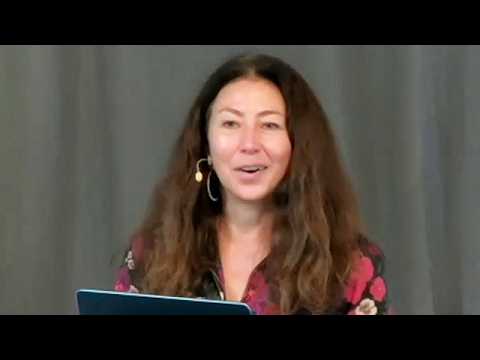
From FH. HGP members demonstrate their willingness to display their skills, talents, hobbies, dreams for the rest of us to appreciate. Be prepared to potentially witness (and/or commit) acts of poetry, music, and/or other artistic exhibitions. Hosted by our inimitable, indisputable, and indubitable master of ceremonies, HGP's Al Christians.
Video of Programs (search and sort)
Randy Blazak discusses the alt-right political phenomenon in relation to the white supremacist movement and the election of Donald Trump. Blazak’s scholarship on hate crimes has made him a regular commenter in media outlets from NPR and CNN to BBC and Al Jazeera. Blazak earned his PhD at Emory University in 1995.
Robert Sanford provides an overview of the elements of poetry, with examples from two poems. Sanford has taught poetry as a high school English teacher. Since then he’s been a police officer, professional speaker and trainer, human resources manager, and technical writer. He joined HGP in 1998 and has served as emcee for seven years.
Norman Huynh, Associate Conductor of the Oregon Symphony, will speak about his path to becoming a conductor. Mr. Huynh is in his second season with the Oregon Symphony. He is responsible for conducting family, youth education, and specials concerts, as well as for assisting the masterworks series. One of his greatest passions is educating the next generation of musicians and music lovers. With an extensive background in music education, he develops youth concerts to provide a tailored and meaningful experience for concertgoers of all ages. Norman Huynh’s performances have been nationally broadcasted on American Public Media's “Performance Today.”
Presentation by architectural history researchers Jim Heuer and Robert Mercer. West coast cities boomed in the early 20th century and Portland was no exception. The rapid growth of electric streetcars led to the rise of "suburban" developments. Heuer and Mercer have been studying the evolution of Portland architecture for the last 17 years. As both life partners and research partners they found common ground in a fascination for the ways our buildings and places are shaped by cultural and technological change.